# Kubernetes Dashboard

The Kubernetes Dashboard provides a centralized view to manage and monitor Kubernetes clusters. On this call it uses a Linux operating system. Here are the steps to log into the Kubernetes Dashboard:

* On the service page of the Cloudka portal select the Deka Harbor menu on the Platform.Kubernetes Dashboard (a)

<figure><img src="https://putri.box.cloudeka.id/cloudeka-assets/static/images/20dekaharbor/20.40dash(a).png" alt=""><figcaption><p>Kubernetes Dashboard (a)</p></figcaption></figure>

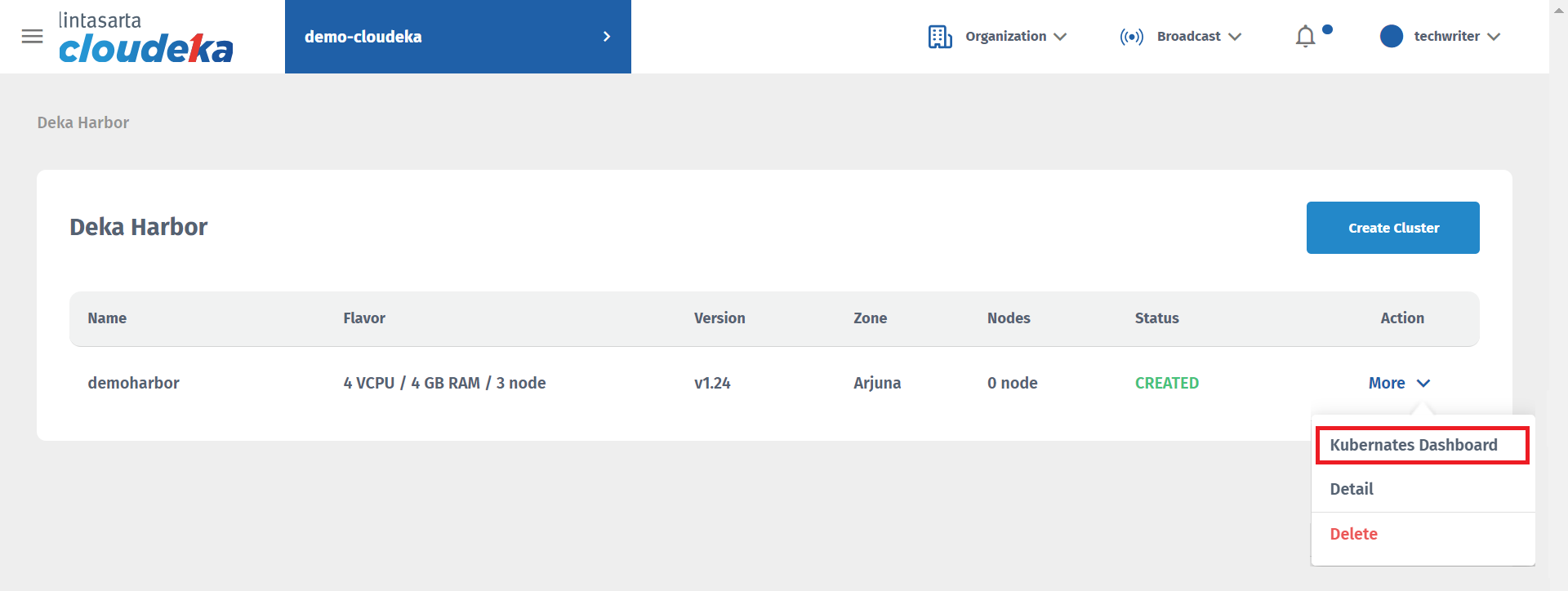
* Select the Deka Harbor cluster click the More button in the Action select Details column.

<figure><img src="https://putri.box.cloudeka.id/cloudeka-assets/static/images/20dekaharbor/20.41dash(b).png" alt=""><figcaption><p>Kubernetes Dashboard (b)</p></figcaption></figure>

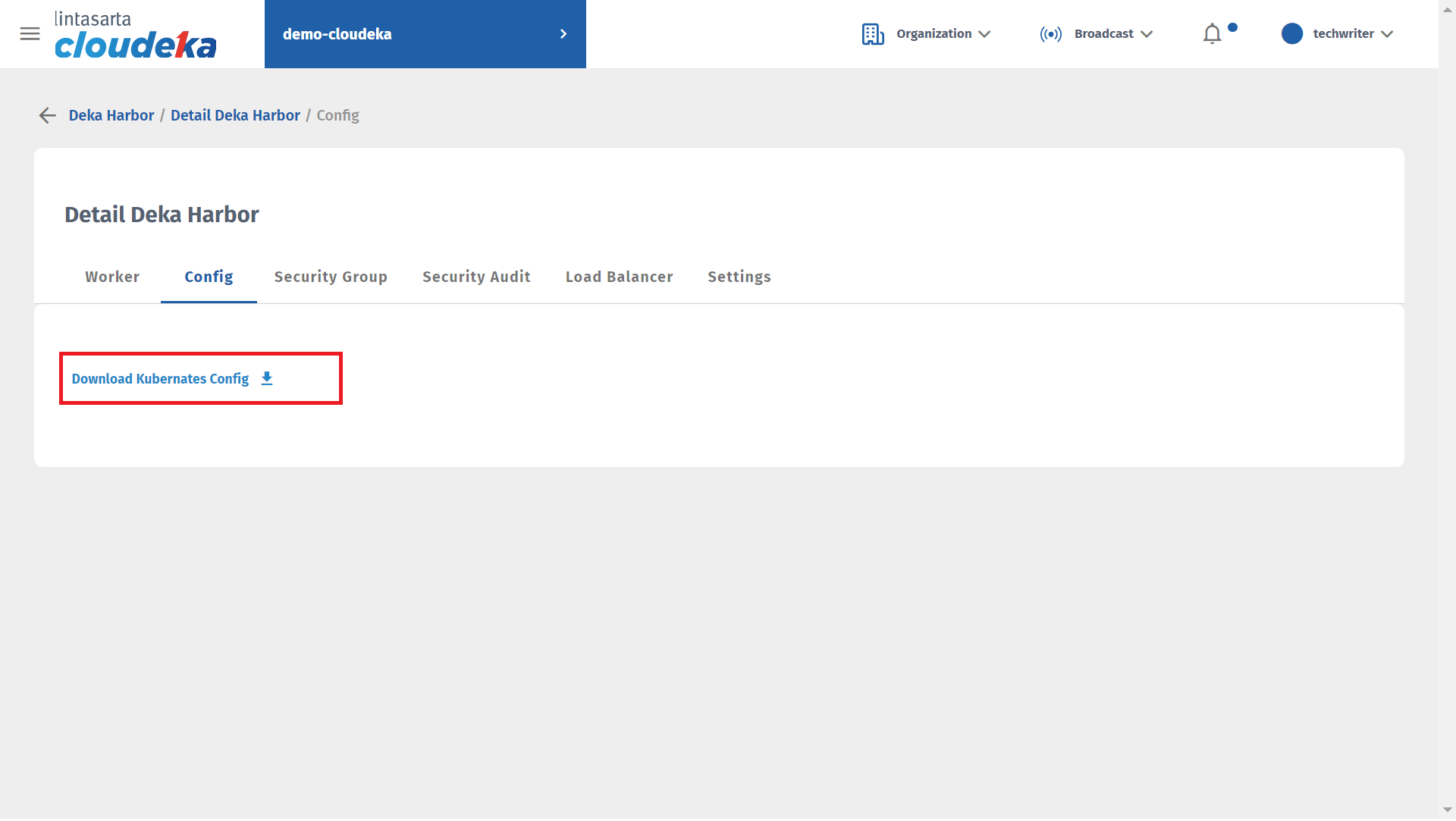
* Download Kubernates Config on the Config tab.

<figure><img src="https://putri.box.cloudeka.id/cloudeka-assets/static/images/20dekaharbor/20.48unduh.png" alt=""><figcaption><p><em>Kubernetes Dashboard (c)</em></p></figcaption></figure>

* Download and install the cubectl on your computer according to the operating system used. Click [this link](https://kubernetes.io/id/docs/tasks/tools/) to learn more about installing other operating systems.
* Next, extract the downloaded Kubernates Config file.

```linux
export KUBECONFIG={/path/config}
```

<figure><img src="https://putri.box.cloudeka.id/cloudeka-assets/static/images/20dekaharbor/20.49ekstrak.png" alt=""><figcaption><p><em>Kubernetes Dashboard (d)</em></p></figcaption></figure>

* Create tokens by copying the following syntax. Make sure the token code is stored in a safe place.

```linux
kubectl -n kubernetes-dashboard create token admin-user
```

<figure><img src="https://putri.box.cloudeka.id/cloudeka-assets/static/images/20dekaharbor/20.50token.png" alt=""><figcaption><p><em>Kubernetes Dashboard (e)</em></p></figcaption></figure>

* To open the Kubernates Dashboard back to the Deka Harbor page click the More button and select Kubernates Dashboard.

<figure><img src="https://putri.box.cloudeka.id/cloudeka-assets/static/images/20dekaharbor/20.51kubedash.png" alt=""><figcaption><p><em>Kubernetes Dashboard (f)</em></p></figcaption></figure>

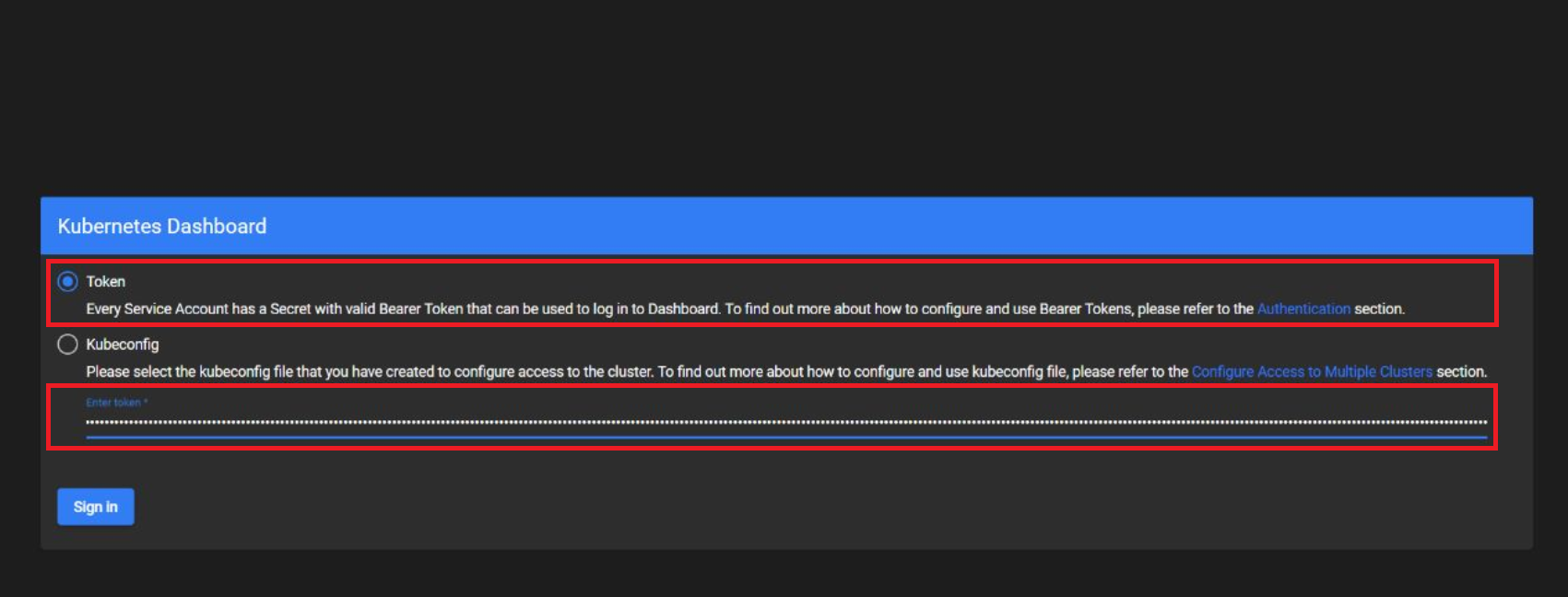
* You will be directed to the Kubernates service dashboard login page. Select Token and enter the acquired token.

<figure><img src="https://putri.box.cloudeka.id/cloudeka-assets/static/images/20dekaharbor/20.52login.png" alt=""><figcaption><p><em>Kubernetes Dashboard (g)</em></p></figcaption></figure>

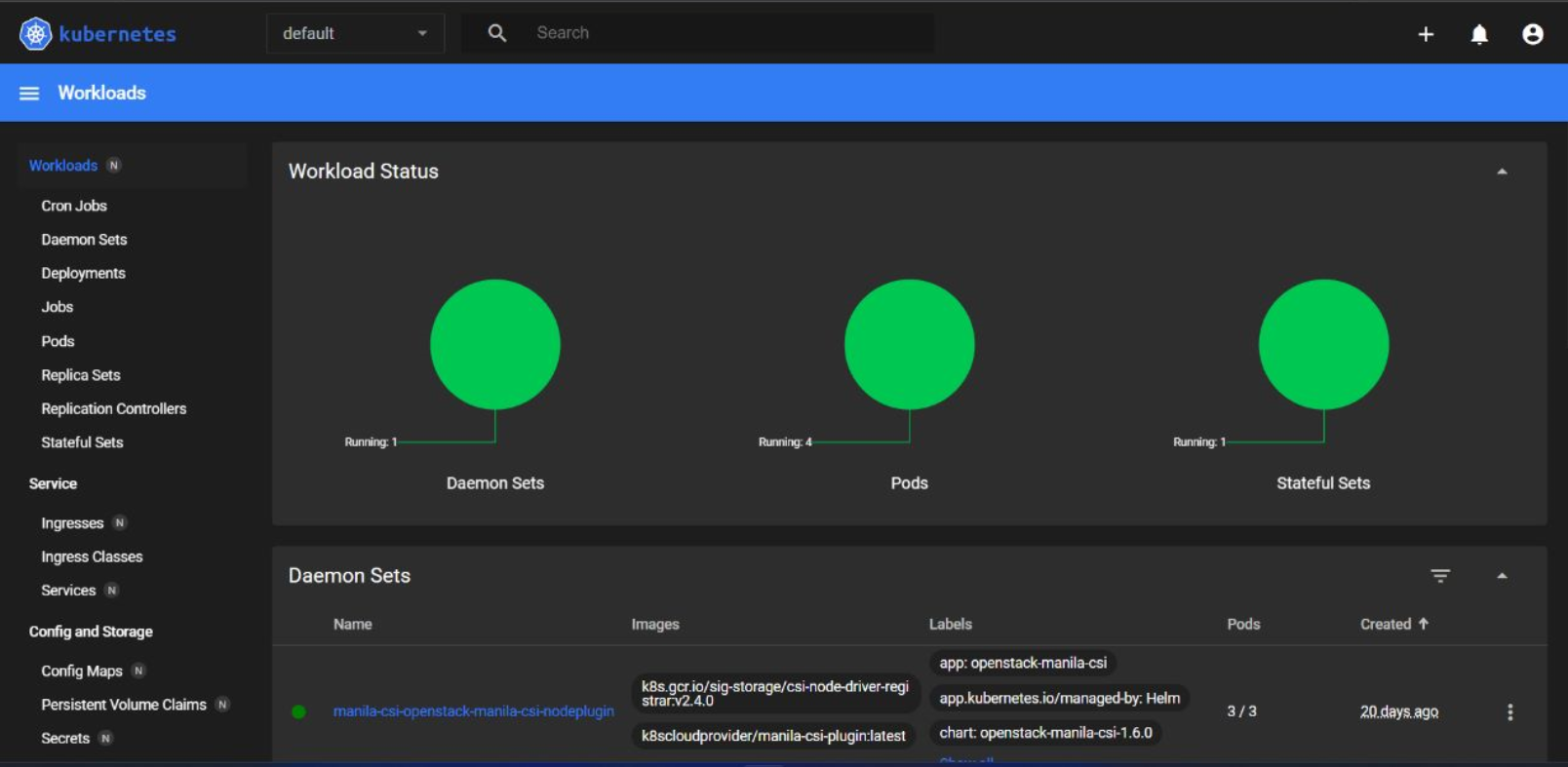
* You made it to the Kubernates Dashboard. Click [this link](https://kubernetes.io/docs/home/) to learn more about Kubernetes.

<figure><img src="https://putri.box.cloudeka.id/cloudeka-assets/static/images/20dekaharbor/20.53dashboard.png" alt=""><figcaption><p><em>Kubernetes Dashboard (h)</em></p></figcaption></figure>


---

# Agent Instructions: Querying This Documentation

If you need additional information that is not directly available in this page, you can query the documentation dynamically by asking a question.

Perform an HTTP GET request on the current page URL with the `ask` query parameter:

```
GET https://docs.cloudeka.id/platform/deka-harbor/kubernetes-dashboard.md?ask=<question>
```

The question should be specific, self-contained, and written in natural language.
The response will contain a direct answer to the question and relevant excerpts and sources from the documentation.

Use this mechanism when the answer is not explicitly present in the current page, you need clarification or additional context, or you want to retrieve related documentation sections.