# NAT

NAT (Network Address Translation) is a technique used in networks to change the host IP address in packets sent between networks. On the NAT tab you can add DNAT, add SNAT, update the DNAT/SNAT configuration, and delete the DNAT/SNAT configuration.

## Add DNAT

The following is a guide to adding DNAT to the NAT tab.

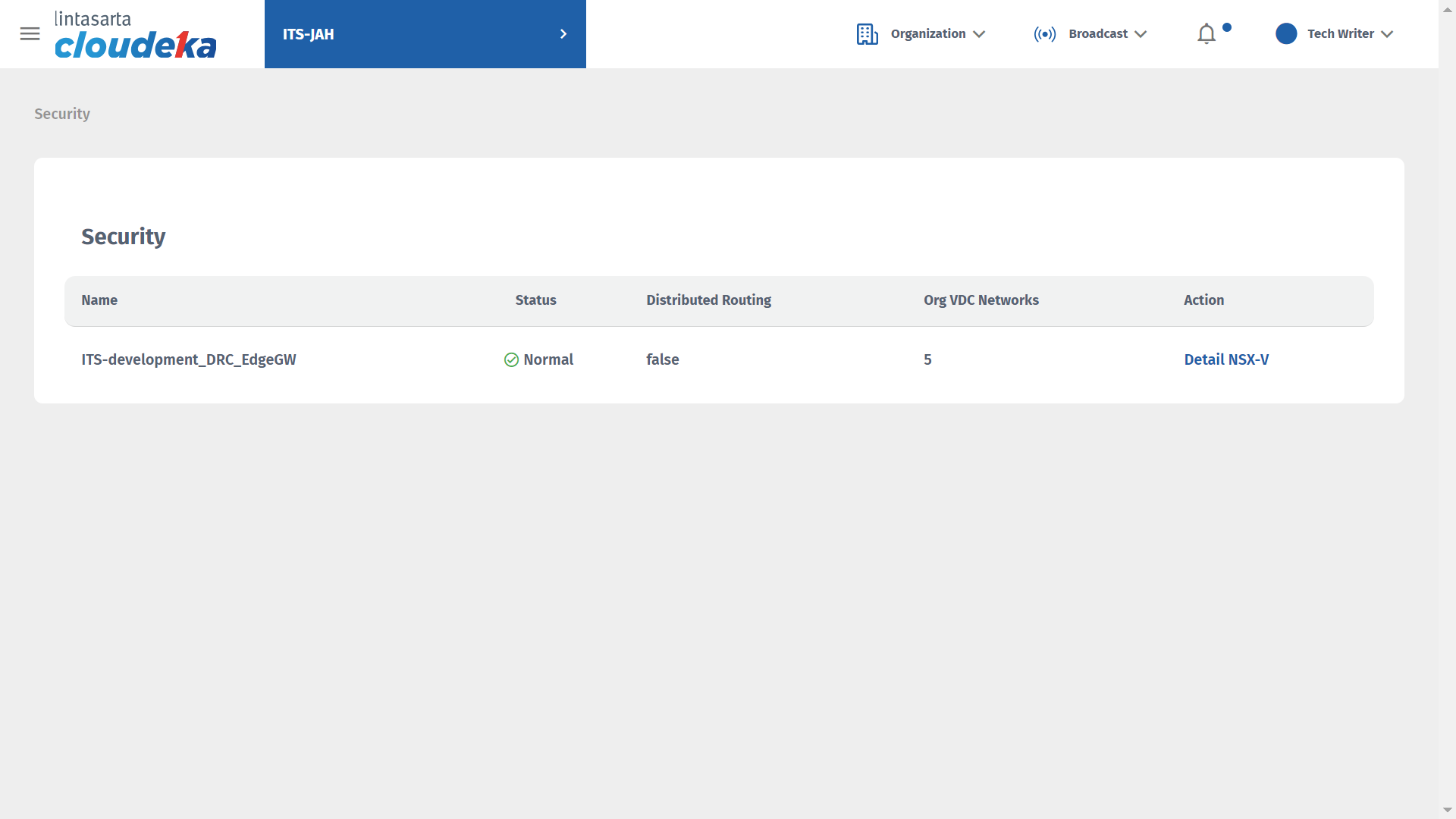
* On the Security menu, click Details.

<figure><img src="https://lh7-us.googleusercontent.com/4aUzqDZAySxr1US3CFucr7RISgg9T6sQG04jhLzsDrtIv2K0GuQewbmvzFQayEK8EOULLF5hjbtQHC09De847-_Q8SFfj2ttvsIn_NREzdIm2OZ94LdRcWWVtOIliFem6zgwfyTrBA-CRoDXHBVEibg" alt=""><figcaption><p>Add DNAT</p></figcaption></figure>

* Select the NAT tab then click the "+ DNAT Rule" button.

<figure><img src="https://lh7-us.googleusercontent.com/l_pNg4I189IV2qwd9D8x0Nxhy8BSBUPIKR7Gou-r5jh1edSaS5iuthJlYSzQlaAYCitYMG6asCQDdH9EAj8wlD0P6JLndLltePhRfDHvDwg0BkSnl36NLBKueeOZxI-4NmbKJu-HChKpQw5Q4lecqxc" alt=""><figcaption><p>Add DNAT</p></figcaption></figure>

* Fill in Applied On, Original IP/Range, Protocol, Translated IP/Range, and Description, click the Confirm button to save the DNAT settings.

<figure><img src="https://lh7-us.googleusercontent.com/xPg9FLMifYo19FBXighhXOu4Lt5tfVgIwxCEE5vL7LsssMhN3ylW-YoF0h36jzxnp2EYl8uinPOmlbUd6A8_Mn0Wke44u_Qw-P9GBeBF1b8MGaTTSCSTHgDhv7nEpPsI_IAvoYkQ04zv_42LN-uXJoY" alt=""><figcaption><p>Add DNAT</p></figcaption></figure>

<figure><img src="https://lh7-us.googleusercontent.com/5NKzs70Pplz__xrPJKsNt47udcKBMSNmyz1RP2uyh2v-5UUWOUFosohYfZezfr_eidpfBxhPxc_hD_r7VJrwv183lc9etAQOMLFrxqh5CCteWlknPxhf33DTDmptK3_p6nbkLF6JrMMlH5JwuTZjSQM" alt=""><figcaption><p>Add DNAT</p></figcaption></figure>

* The notification "NAT has been successfully updated!" will appear.

## Add SNAT

Here are the steps to add SNAT to the NAT tab.

* On the Security menu click Details.

<figure><img src="https://putri.box.cloudeka.id/cloudeka-assets/static/images/16%20Deka%20Prime/16.46%20nsxv.png" alt=""><figcaption><p>Add SNAT</p></figcaption></figure>

* Select the NAT tab and click the **"+ SNAT Rule"** button.

<figure><img src="https://lh7-us.googleusercontent.com/A3pLXENlqS73RqK4E2p2_ORAdeFNTY3lCQ3Fagd7Hw522INBjmMc1x8WTe92VR7c43tXGYwwSTgO0s3Lv9WDpGhvOHJFgPOeiJJhLY-4H6S_qlPfxPHe_ysAIRFj_NpE3Whk4us5iW5T9Jkaz8B2ahA" alt=""><figcaption><p>Add SNAT</p></figcaption></figure>

* Fill in Applied On, Original IP/Range, Protocol, Translated IP/Range, and Description, click the Confirm button to save the SNAT settings.

  <figure><img src="https://lh7-us.googleusercontent.com/YPt2sJnFOxpHd8Z2QogWV08mY4uYaa2N4_I4GMybhwt2127-dqbfJcNSDbjaMXB-Ek_6ObH_ZSCV1cSSzmsQRrxF0nI6ap-8x3Kviva-wwwPUZ_aO0GIeGen0mFgge9-vQ_IVHlZ1hvQbg39d_PoWKs" alt=""><figcaption><p>Add SNAT</p></figcaption></figure>
* Fill in Applied On, Original IP/Range, Protocol, Translated IP/Range, and Description, click the Confirm button to save the SNAT settings.

<figure><img src="https://lh7-us.googleusercontent.com/YPt2sJnFOxpHd8Z2QogWV08mY4uYaa2N4_I4GMybhwt2127-dqbfJcNSDbjaMXB-Ek_6ObH_ZSCV1cSSzmsQRrxF0nI6ap-8x3Kviva-wwwPUZ_aO0GIeGen0mFgge9-vQ_IVHlZ1hvQbg39d_PoWKs" alt=""><figcaption><p>Add SNAT</p></figcaption></figure>

<figure><img src="https://lh7-us.googleusercontent.com/g7CMzDxzqKtY1E4JfK9sGgv4ohGaBOAxyZ6ygvf7AalG2D69vemSxBlbf7ipgmGywpr_l9OUqONsfQ3f-fo-BcI-zF3HOJFg1Q6B-nqJE9FdUQQ5KoW9KoXbm6XwbOGWaswsUsFXOs4G-yXFTY-Dy9E" alt=""><figcaption><p>Add SNAT</p></figcaption></figure>

* The notification "NAT has been successfully updated!" will appear.

## Edit DNAT/SNAT

Here are the steps to upgrade SNAT/DNAT on NAT:

* On the Security menu click Details.

<figure><img src="https://putri.box.cloudeka.id/cloudeka-assets/static/images/16%20Deka%20Prime/16.46%20nsxv.png" alt=""><figcaption><p>Edit DNAT/SNAT</p></figcaption></figure>

* Select the NAT tab, select the DNAT/SNAT data that will be updated then click the "edit" button.

<div data-full-width="true"><figure><img src="https://lh7-us.googleusercontent.com/5Wc2ftVv-ZAbpth8exkxNKPyIuAg87nrip-dkHs9hztRHd88udm7wQKPmr95gHkvO_LZR-Fcx4ZZ24I7gmcgKFf9g7hG0oZ3WNVJwVdJCrGBJ3z034ijoVsaTrbnv4_5jmn2jw7UVNd4QDe8LyrgvDs" alt=""><figcaption><p>Edit DNAT/SNAT</p></figcaption></figure></div>

* The Edit /DNAT SNAT Rule window appears. The data that can be changed are Applied On, Original IP/Range, Protocol, Translated IP/Range, and Description, click the Confirm button to save the changes.

<figure><img src="https://lh7-us.googleusercontent.com/wE8kdM92gE5qdBuMWmFaiHQV09WiOGUnFCBXBgs6AkHpEY2x_cq443iuDSxvqB04d9gggum3JZomEN_g7ySjb0A3OQ1ttY6kS6aiOxN6CJsLyLGHCySr4CLd2gNjQ4caBuvCcu10e5lbWV5rHW_8mvM" alt=""><figcaption><p>Edit DNAT/SNAT</p></figcaption></figure>

<figure><img src="https://lh7-us.googleusercontent.com/ht2fMd6i-nvvPUAKS3k_Rt3n47z6odqUhDCf4dKCeKiiSUXt_vPdLpMiq2LU1E530UAS62J2DVmr8sWOr6YMy510cktc5fPNvHRHZpQY2xps-4kIByvH0FuMpXKL3ujsQhGvihgQreMvXeWTCjcf6lM" alt=""><figcaption><p>Edit DNAT/SNAT</p></figcaption></figure>

* The notification "Successfully updated NAT Rule" appears.

## Delete DNAT/SNAT

Here are the steps to remove the SNAT/DNAT configuration on NAT:

* On the Security menu, click Details.

<figure><img src="https://lh7-us.googleusercontent.com/4aUzqDZAySxr1US3CFucr7RISgg9T6sQG04jhLzsDrtIv2K0GuQewbmvzFQayEK8EOULLF5hjbtQHC09De847-_Q8SFfj2ttvsIn_NREzdIm2OZ94LdRcWWVtOIliFem6zgwfyTrBA-CRoDXHBVEibg" alt=""><figcaption><p>Delete NAT</p></figcaption></figure>

* Select the NAT tab then select the firewall data to be deleted then click the Delete icon.

<figure><img src="https://lh7-us.googleusercontent.com/Oe5kHBly9xlOXbaTb5-5dHx55KK6u2H6PkYRjEEeV7kTrHrNFRAiC9G7dTzBmJpAXKFU9xvponnbQRsOC4yCDC2_S5qfk0_zA85xOjBiWYvT5K1b7-VnjHTgRcjKYW4wu3ZPm4VOMNgLlOMl_MlOXSk" alt=""><figcaption><p>Delete NAT</p></figcaption></figure>

* Click Confirm.

<figure><img src="https://lh7-us.googleusercontent.com/RX-CWLHMpx37HDPu59cxVzdt4VG_bmc2Qid_lHTyNFkF7VLOSqAZztqUy4VAGc8fpUXbC4ph7RJne95dIfRU68NKf7h3vHyU5Da_TqoJJdZrlOsS-2BPrdsGj-hPJSxxR2Mvvc0k1P507SKslN-p54A" alt=""><figcaption><p>Delete NAT</p></figcaption></figure>

* The notification "Successfully updated NAT Rule" appears.


---

# Agent Instructions: Querying This Documentation

If you need additional information that is not directly available in this page, you can query the documentation dynamically by asking a question.

Perform an HTTP GET request on the current page URL with the `ask` query parameter:

```
GET https://docs.cloudeka.id/deka-prime/menu-security/nat.md?ask=<question>
```

The question should be specific, self-contained, and written in natural language.
The response will contain a direct answer to the question and relevant excerpts and sources from the documentation.

Use this mechanism when the answer is not explicitly present in the current page, you need clarification or additional context, or you want to retrieve related documentation sections.